


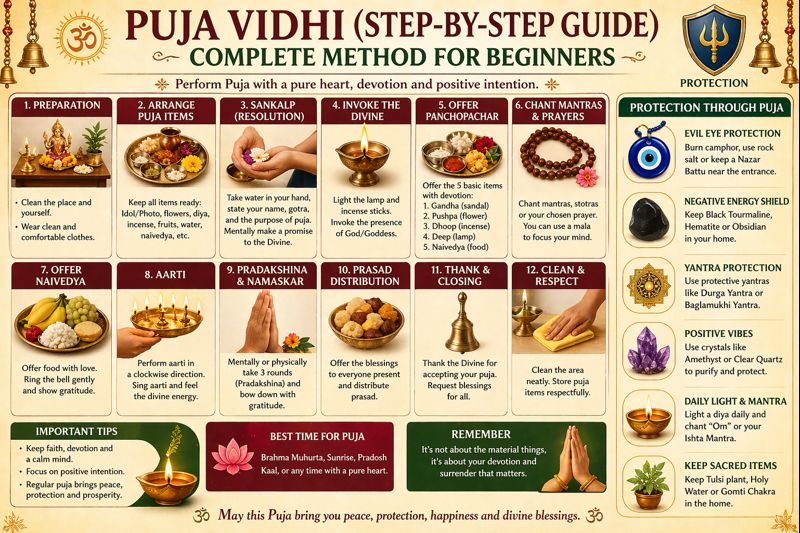
Puja Vidhi (Step-by-Step Guide) – Complete Method for Beginners

Puja Vidhi is a sacred spiritual practice in Hindu tradition where devotees worship deities with devotion, rituals, and offerings. Performing puja at home brings peace, positivity, prosperity, and spiritual growth. Many people want to do puja correctly but are unsure about the proper steps.
This guide will explain Puja Vidhi step-by-step in a simple way, so even beginners can follow it easily.
What is Puja Vidhi?
Puja Vidhi means the proper procedure or method of worship. It includes cleaning the space, preparing offerings, chanting mantras, and performing rituals in a respectful manner.
The main purpose of puja is to:
- Connect with divine energy
- Bring peace and positivity
- Remove negative energy
- Fulfill wishes with devotion
Puja is not just ritual; it is a spiritual discipline that calms the mind and strengthens faith.
Benefits of Performing Puja Vidhi
Doing puja regularly brings many benefits:
1. Peace of Mind
Daily puja reduces stress and brings mental clarity.
2. Positive Energy
It purifies the environment and removes negativity from the home.
3. Spiritual Growth
It helps you develop discipline, gratitude, and devotion.
4. Prosperity and Success
Many believe that regular puja attracts wealth, success, and good fortune.
5. Family Harmony
It creates unity and understanding among family members.
Things Required for Puja Vidhi
Before starting, collect all necessary items:
- Clean cloth
- Idol or picture of deity
- Diya (lamp)
- Incense sticks (agarbatti)
- Flowers (fresh preferred)
- Water in a clean vessel
- Kumkum (vermilion)
- Rice (akshat)
- Fruits and sweets as prasad
- Bell (ghanti)
- Puja thali
Optional:
- Ganga jal (holy water)
- Camphor
- Panchamrit (milk, curd, honey, sugar, ghee mix)
Puja Vidhi Step-by-Step Guide
Follow these steps carefully for a proper puja experience.
Step 1: Clean Yourself and the Place
Before starting puja, take a bath and wear clean clothes. Clean the puja area properly. A clean environment helps attract positive energy.
You can also sprinkle water mixed with Ganga jal around the puja space.
Step 2: Set Up the Puja Altar
Place the idol or image of the deity on a clean cloth. Decorate the area with flowers and light colors. Keep all puja items arranged neatly on the puja thali.
Make sure the altar faces east or north direction for better energy flow.
Step 3: Light the Diya and Incense Sticks
Light a diya using ghee or oil. Also light incense sticks to purify the air. The fragrance helps create a calm and spiritual atmosphere.
Lighting the diya represents removing darkness (ignorance) and bringing light (knowledge).
Step 4: Take Sankalp (Intention)
Sit quietly with folded hands and take a sankalp (intention). Sankalp means mentally deciding the purpose of your puja.
For example:
- For peace
- For health
- For success
- For gratitude
This step is very important because puja becomes more powerful when done with clear intention.
Step 5: Invoke the Deity (Avahan)
Close your eyes and invite the deity into your heart and puja space. Chant simple mantras or prayers like:
“Om Gan Ganapataye Namah” (for Lord Ganesha)
This step helps you feel spiritually connected.
Step 6: Offer Water (Abhishekam or Jal Arpan)
Offer clean water to the deity symbolically. This represents purification and respect.
Some people also perform abhishekam with milk, honey, or curd depending on tradition.
Step 7: Offer Flowers and Akshat
Offer fresh flowers and rice grains (akshat) to the deity. Flowers represent devotion and purity.
While offering, you can chant:
- “Om Namah Shivaya”
- “Om Shri Ganeshaya Namah”
- Or any mantra related to your chosen deity
Step 8: Apply Tilak and Offer Clothes (Optional)
Apply kumkum or sandalwood paste on the deity (or picture). In traditional puja, symbolic clothes are also offered.
This step shows respect and devotion.
Step 9: Chant Mantras or Read Scriptures
Now spend a few minutes chanting mantras or reading religious texts like:
- Bhagavad Gita verses
- Hanuman Chalisa
- Durga Chalisa
- Gayatri Mantra
Chanting creates positive vibrations and mental peace.
Step 10: Offer Prasad
Offer fruits, sweets, or homemade food as prasad. After puja, distribute it among family members.
Prasad symbolizes blessings from the deity.
Step 11: Perform Aarti
Light camphor or diya and perform aarti by rotating it clockwise in front of the deity. Sing or listen to aarti songs like:
- Om Jai Jagdish Hare
- Jai Ganesh Deva
- Hanuman Aarti
Aarti marks the completion of devotion and gratitude.
Step 12: Bow Down and Seek Blessings
Finally, bow down with folded hands and ask for blessings. Sit quietly for a few minutes and feel the positive energy.
Important Tips for Puja Vidhi
- Always perform puja with a clean mind and body
- Avoid distractions like mobile phones
- Do not rush the process
- Perform puja with full devotion, not force
- Consistency is more important than complexity
Common Mistakes to Avoid
- Skipping cleaning before puja
- Using stale flowers or prasad
- Performing puja without focus
- Not maintaining regularity
- Ignoring correct direction (east/north preferred)
Simple Daily Puja Vidhi (Quick Version)
If you don’t have much time, follow this short version:
- Light diya and incense
- Offer flowers
- Chant mantra for 5–10 minutes
- Offer prasad
- Do aarti
Even a short daily puja brings positive energy.
Conclusion
Puja Vidhi is a beautiful spiritual practice that connects you with divine energy and brings peace into your life. It is not about complicated rituals but about devotion, faith, and sincerity.
Whether you perform a detailed puja or a simple daily ritual, what matters most is your intention and consistency.
Start practicing Puja Vidhi regularly, and you will notice positive changes in your thoughts, energy, and life.